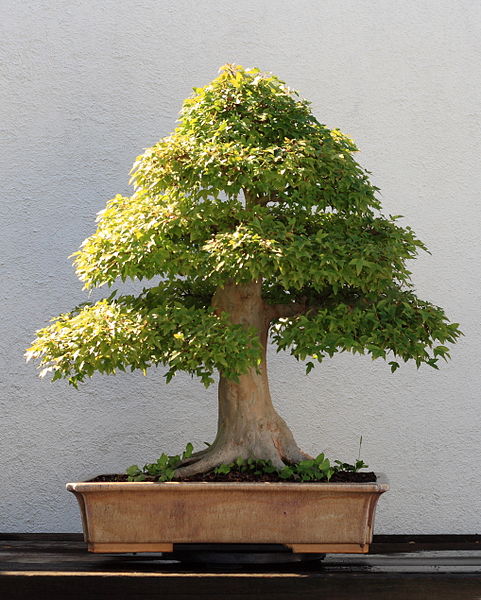
The beauty and elegance found in bonsai plants is characterized by the shape of plants that are quite small and unique, various shapes and types of bonsai plants that are diverse make many people want to have them, the miniature art in making bonsai plants certainly involves the wonders of nature and creativity made by humans to be placed outdoors and indoors, the more complicated the shape of the bonsai tree, then this will affect the price aspect which of course is very expensive.
Placing bonsai in the right room or according to personal preferences will add to the beauty of the room or garden, especially bonsai plants are plants that become prima donna and have their own charismatic charm compared to other ornamental plants. Bonsai plants, in addition to having a beauty that radiates strongly, choose to use this plant to decorate the appearance of the house, of course, sufficient, regular, and sustainable care is needed to maintain the health and beauty of the plant. Here are some ways to care for bonsai plants, including:
Bonsai Placement
In placing bonsai, it must be carefully considered and adjusted to the type of bonsai plants such as pine and jupiter bonsai types that are placed outdoors while examples for bonsai that are placed indoors such as jade and ficus, therefore the placement of bonsai should not be careless because if placed incorrectly it can affect the development of the plant, besides that most of the bonsai plants at least need sunlight lighting It varies depending on the type of bonsai chosen so that placement is done correctly in a certain ideal location to make bonsai healthier and more beautiful, usually unhealthy bonsai plants will see signs such as yellowing leaves then over time there will be shedding, this may be an indication of excess light, on the contrary, weak growth, wilting indicates a lack of light.
Watering
The first step that must be taken in the bonsai planting medium must be sufficient water intake, so a smooth watering and drainage process is needed so that water does not stagnate and avoid rotting of plant roots, but watering that is carried out often can result in an increased risk of fungal attack, so it is better when watering this can be adjusted to the condition of the planting medium owned, for example by checking the humidity conditions on the The surface of the soil in the pot by inserting a finger or using a toothpick into the soil if it is seen that the soil condition feels dry, then immediately water every morning and evening 1-2 times or as needed. Then make sure to replant bonsai, the soil should not look dry because it can trigger the bonsai to die. Specific types of bonsai planted in order to get good water intake, use clean water to water them, and avoid using water that has high chlorine levels and smells.
Controlling Temperature and Humidity
Maintaining temperature and humidity is very important for the health of bonsai so that humidity and stable temperatures are needed to grow optimally, environmental humidity will affect the specific type of bonsai, and avoid very drastic temperature changes.
Fertilization
An important aspect of planting bonsai plants is to carry out maintenance, one of which is by providing fertilizer and fertilizer used according to the type of fertilizer based on the growth phase in order to get nutrients and healthy, fresh, and beautiful bonsai growth, for example, homeowners can use special types of fertilizers such as low nitrogen can function for maintenance, while high nitrogen functions for growth. However, in giving fertilizer, it should not be excessive because it can damage and cause the plant to die, so it is necessary to provide balanced fertilizer and must be considered to provide fertilizer, avoid putting fertilizer on replanted or newly cut bonsai plants, wait at least one month to get better results, after one month can apply fertilizer, then observe the bonsai plant after being fertilized, if the plant reacts like falling off, wilted, the color of the leaves changes, then reduce the frequency of fertilizer.
Pruning and Shaping
The art of caring for bonsai can be done by pruning and shaping treatments to maintain the shape of the tree as desired, pruning bonsai, for example, can prune new shoots that grow downwards, branches that grow crosswise or can prune parts of the trunk, branches, or leaves according to taste, However, to do pruning is adjusted to the growth of the bonsai, if the bonsai is classified as fast growing, pruning can be done once a month, the main purpose of pruning is to look neat, beautiful, avoid wild plants or weeds around the plant, and can be formed according to personal preference, the posture of the tree can be formed according to personal preferences, to form bonsai plants can use wire made of aluminum, stainless steel, or copper according to taste is then carefully wound to avoid damage to the bark of the tree, usually the wire can be removed for one season in the growth of bonsai plants and the bonsai owner can form the desired plant creation, for example it can be made cascade, upright, and formal styles.
Replacement of Planting Media
A good and ideal planting medium can be done by replacing the planting medium so that the soil nutrients are better and maintained, but the use of planting media must be appropriate because it can affect health, growth, and planting media that is not replaced for a long period of time resulting in disease nests.
Replacing the Pot
The size of bonsai that has begun to grow is getting bigger, taller, and grows many roots that fill the planting medium area in the pot, therefore it is very important to consider replacing the use of appropriate and ideal pot sizes so that it can encourage to accommodate plant growth and the intake that will be received in bonsai such as increasing intake of water, soil, and sunlight, In contrast to bonsai that is not repotted, it will result in stunted growth, meanwhile, to replace the pot, make sure the pot must have small holes at the bottom so that water can flow out.
Pest and Disease Management
Checking pests on bonsai plants needs to be done regularly and regularly in order to overcome and control pests that attack such as insect pests, aphids, spiders and other pests, for the treatment of these plants can be overcome using appropriate insecticide soap or fungicides but if the bonsai plant is attacked by pests and diseases then it must be dealt with immediately and remain careful with chemicals, Read the rules for using the product so that the bonsai remains beautiful, and maintained.
Conclusion
In caring for bonsai requires a lot of knowledge, it must be diligent, high loyalty, continuous observation and understanding the needs of bonsai plant care such as providing the right environment, watering, fertilizing, shaping, pruning, lighting, and pest management, by applying the right care it can be ensured that bonsai plants can grow healthy, develop, and increase their amazing aesthetic value.
 Build ON
Leave a comment