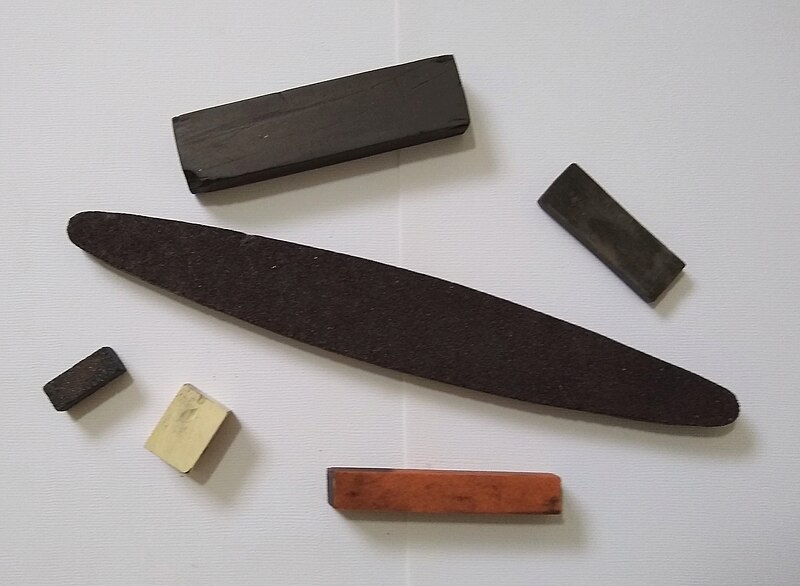
The importance of knowing a good understanding and technique in sharpening knives first so that serious problems do not occur and knives become sharper when cutting food ingredients, in contrast to the use of blunt kitchen knives used in the cooking process, this is certainly very dangerous in addition, it also requires a lot of energy that must be expended to do various work needs in the kitchen, especially blunt knives allow hands to slip and when cutting can miss the target so that the cut results become uneven, then when cooked, the level of doneness is not perfectly uneven and such an event can waste a lot of time.
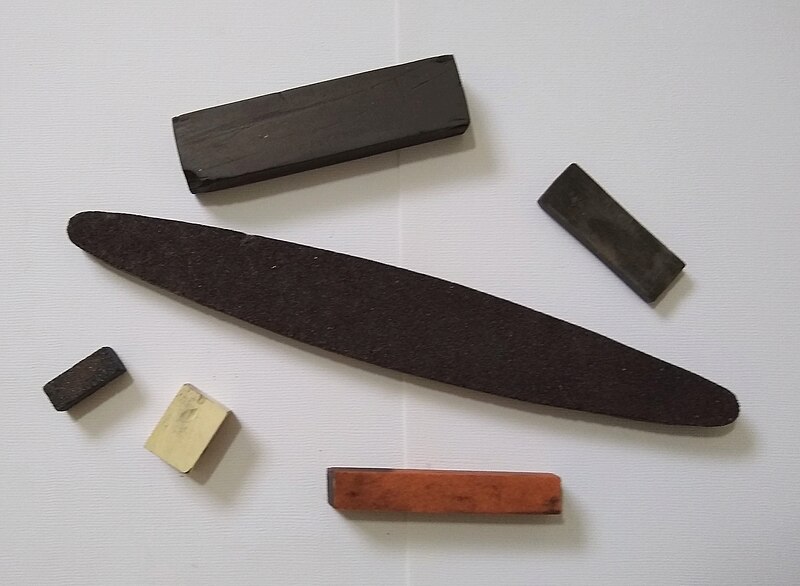
Having a sharp knife is one that can improve cooking in the kitchen easier, faster, better cuts and of course has a great influence on the food that will be served, that’s why the knife must be sharpened correctly and regularly so that the level of sharpness of the knife is maintained, durable and functions optimally, For this reason, it should be noted that sharpening a knife cannot be done carelessly but involves several steps by making sure the knife is really sharp. Here are some steps by step to sharpen knives, including:
Using the Sharpening Stone
The main step to sharpen knives can be to use a whetstone, but before using it, it is necessary to pay attention to the following things to maintain better humidity and be easy to use by:
- Soak the whetstone first for about 15 minutes or until air bubbles do not rise, this aims to make it easier and very effective to sharpen the knife when scrubbing
- After soaking, place the sharpening stone using a suitable placemat so that it is not slippery on a flat and stable surface.
- Start holding the knife and make sure it is in the right position then start sharpening with a 20-degree slope close to the sharpening stone.
- Sharpen in a back-and-forth motion and apply a little moderate pressure to get the blade to erode better.
- Repeat the movement on both sides of the blade.
- Use a rough side sharpening stone first because the sharpening stone has two sides, namely rough and smooth, choosing the rough side to sharpen the knife can give the kitchen knife a sharper, more durable, rust that sticks and stubbornly disappears faster, can flatten the blade so that the blade looks cleaner.
- After that, when it is finished, the next step to perfect the sharpness of the knife can move and use a sharpening stone on the smooth side, then rub the blade and press about 5-10 times when it feels sharp enough, clean it again before use and dry it using a rag until dry, then it can be used to cut foodstuffs.
Using Ceramic Cutlery
When the owner does not have a whetstone at home, he can use cutlery made of ceramic materials such as mugs, plates, bowls that can help sharpen knives and the method is quite easy:
- The first one turns over the tableware either the plate, mug, or bowl that will be used according to the owner’s choice.
- Then on the back this will be used to sharpen the knife precisely at the bottom which has a circular shape with a rough texture.
- Hold the cutlery tightly and sharpen the knife with an inclined position of about 15 degrees on the part that has no paint carefully because the material of this ceramic is easily slippery, then rub several times with even pressure until the knife becomes sharper.
Using Honing Rod
Honing rod has a similar shape to a screwdriver but this tool can be used to sharpen knives which is very suitable and good for maintaining and maintaining the level of sharpness of the knife, usually honing rods are used by chefs to sharpen knives to cut food ingredients to be cut and cooked. The use of honing rods has guidelines such as:
- The first step is to hold the rod from the honing rod vertically on the surface and keep in mind that before putting it on the surface, put a tray or cloth so that it is not slippery and does not hurt your hands.
- Then hold the knife at an angle of about 15 degrees on the honing rod.
- Move the knife and rub it downwards from the base to the tip then pull it back until it repeats.
- After that, rub again on the sides of each knife alternately.
Using Manual Sharpeners
Having a manual knife sharpener will make it easier for the user to sharpen it and it is very capable of sharpening the blade with full pads, at a low price, user friendly and to sharpen it takes a few minutes the knife can be sharp however this tool has two settings with different functions. The sharpening slot of the Course serves to make the blunt knife sharper by reshaping the parts of the blade that are not sharp into sharp, while for Fine it is used for routine maintenance in daily life after use and this tool can be stored in a drawer, then how to use it is easy such as:
- First, place the manual knife sharpener on a flat, stable surface.
- Take a knife and insert it in the coarse slot.
- After that pull the knife handle from the base to the tip.
- Repeat continuously in general 3 pulls for blunt knives that have a medium level of sharpness, while for 6 pulls serve to sharpen very blunt knives.
Using Mortar and Pestle Stone
Utilizing kitchen utensils such as stone sharpeners that are similar to sharpening stones that are used to grind spices manually, but in addition to that can be used to sharpen knives, how to use them is:
- Wet knives and mortar and pestle stones
- Turn the mortar stone over because it is used to sharpen the back.
- Gently rub back and forth until sharp
Electric Sharpener
Sharpening knives in a fast, easy, and practical time can use electric sharpening so that the motorized wheels on the machine can rotate against the blades so that the owner does not spend a lot of energy but need to be considered before using this tool see the instructions from the manufacturer, and in general the way to use it is quite easy as follows:
- Connect the cord to a power source
- Press the power button on the knife sharpener
- Hold the knife and insert it in the slot
- After the sharpening is complete, then pull the knife slowly and smoothly
- Turn off the power and unplug the cord from the power source
- Then wash and wipe dry
- Knives ready to use
Sandpaper
Sandpaper that has different levels of surface hardness can be used to sharpen knives, it would be better if sandpaper that was getting rougher was used to sharpen knives, alternatives to sandpaper sheets are quick to see and keep in mind that using sandpaper must be more careful and should not be careless because it can hurt hands. How to use this sandpaper is easy:
- Previously, the sandpaper sheet and knife must be moistened with water to make it easier to scrub the knife
- Place a sheet of sandpaper on a rectangular wooden placemat of medium size or other placemats according to taste
- Then determine the sharpening angle of about 20 degrees
- Then rub the knife in a back-and-forth motion with even pressure
- After that alternate with the side of the knife to sharpen
- Test the sharpness of the knife using paper, after it is felt sharp enough, clean it and before using it make sure the knife is dry again.
Conclusion:
By following the steps above, the owner no longer needs to worry when experiencing problems with blunt knives, so that the cooking process in the kitchen is more efficient, but regular maintenance is needed to help maintain the sharpness of the knife and maintain its durability which of course is supported by the selection of sharpening tools according to needs, then stored correctly but if the knife sharpening process has not been successful, it can be taken to a professional service for results which is better.
 Build ON
Leave a comment